How to Send Automated Appointment Reminders by Email, SMS, and WhatsApp

How to Send Automated Appointment Reminders by Email, SMS, and WhatsApp A client books an appointment two weeks out. Life happens. By the time the appointment day arrives, they have forgotten entirely. They do not show up. You lose the revenue, the time slot goes empty, and your staff sits idle....

How to Send Automated Appointment Reminders by Email, SMS, and WhatsApp

How to Send Automated Appointment Reminders by Email, SMS, and WhatsApp

A client books an appointment two weeks out. Life happens. By the time the appointment day arrives, they have forgotten entirely. They do not show up. You lose the revenue, the time slot goes empty, and your staff sits idle.

This scenario plays out millions of times every day across service businesses worldwide. And the fix is remarkably simple: automated appointment reminders.

SMS reminders alone reduce no-show rates by 29% to 39%, according to research across healthcare, beauty, and professional services. Multi-channel reminders that combine email, SMS, and WhatsApp perform even better because they reach clients wherever they are most likely to see the message.

This guide explains how to build a reminder sequence that runs automatically, which channels to use and when, how to write messages that clients actually read, and how to set everything up without adding manual work to your team's day.

Why Automated Reminders Work Better Than Manual Ones

Many small businesses still rely on staff to call or text clients the day before their appointment. This approach has three problems.

First, it takes time. A receptionist calling 20 clients to confirm tomorrow's appointments can spend over an hour on the phone, assuming everyone picks up. Most will not.

Second, it is inconsistent. On busy days, reminder calls get skipped. On vacation days, they do not happen at all. One missed day of reminders can mean a spike in no-shows the next day.

Third, it only covers one touchpoint. A single phone call the day before is one chance to reach the client. If they miss it, there is no backup.

Automated reminders solve all three problems. They fire on schedule every time, they cost zero staff time after initial setup, and they can reach clients through multiple channels at multiple intervals. A client who misses the email might see the SMS. Someone who ignores the 48-hour reminder will get another one at 24 hours.

The consistency is what makes automation so effective. No-show reduction is not about any single reminder. It is about a reliable system that never forgets.

The Optimal Reminder Sequence

Not all reminder timing is equally effective. Research and real-world data from booking platforms point to a specific sequence that balances early notice with last-minute reinforcement.

Booking confirmation (immediate). The moment a client completes a booking, send a confirmation by email. This is not technically a reminder but it sets the foundation. It tells the client the booking went through, gives them all the details in one place, and includes a link to cancel or reschedule if needed. Clients who receive an instant confirmation are more likely to treat the appointment as a firm commitment.

First reminder: 48 hours before (email). Two days before the appointment, send an email reminder. Email works well at this interval because the client has enough time to reschedule if something has come up. A 48-hour window also gives you time to fill the slot if they cancel. Include the full appointment details and a prominent reschedule/cancel link.

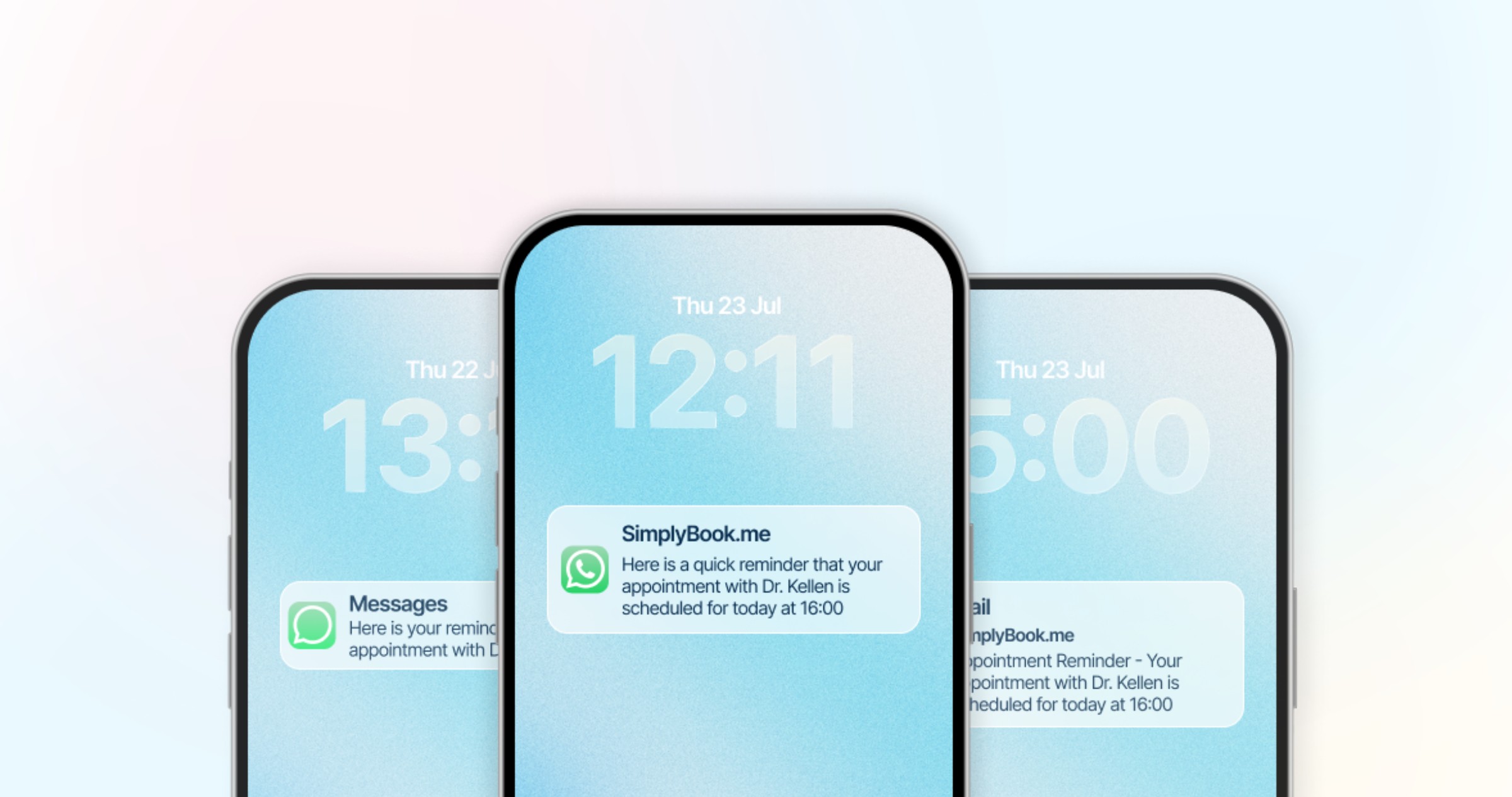
Second reminder: 24 hours before (SMS or WhatsApp). This is the most critical touchpoint. Text messages have a 98% open rate and are typically read within 3 minutes of delivery. At the 24-hour mark, the appointment is close enough that it is top of mind, but there is still time for a cancellation to be useful to your business. Use SMS or WhatsApp rather than email here because the urgency warrants a channel that clients check immediately.

Final reminder: 2 to 3 hours before (SMS). For same-day reinforcement, a short SMS a few hours before the appointment catches anyone who acknowledged the earlier reminders but forgot to act. Keep this message brief: just the time, the service, and the location. This final nudge is especially valuable for morning appointments booked days or weeks in advance.

This four-touchpoint sequence covers the full timeline from booking to appointment. Each message serves a different purpose: confirmation establishes commitment, the 48-hour email gives time to adjust, the 24-hour SMS creates urgency, and the day-of reminder prevents last-minute forgetfulness.

Choosing the Right Channel: Email vs SMS vs WhatsApp

Each channel has different strengths. The best reminder strategy uses a combination rather than relying on any single channel.

Email is ideal for detailed messages. It supports formatting, images, links, and longer text. It is free to send in most booking systems. The downside is open rates: business emails average around 20% to 25% open rates, and many appointment reminder emails land in promotions or spam folders. Use email for confirmations and early reminders where the client has time to check their inbox.

SMS is the highest-impact reminder channel. The 98% open rate is not a marketing claim but a consistently measured reality. SMS messages are short, immediate, and hard to ignore. The downside is cost: SMS messages typically cost between $0.01 and $0.05 per message depending on the country and provider. For a business sending 200 reminders per month, that is $2 to $10, which is negligible compared to the revenue saved from even one prevented no-show.

WhatsApp combines the immediacy of SMS with the richer formatting of email. In markets where WhatsApp is the primary communication tool (much of Europe, Latin America, Asia, and Africa), WhatsApp reminders can outperform SMS because clients are already checking the app constantly. WhatsApp Business API also supports interactive buttons, so you can include "Confirm" and "Reschedule" options directly in the message.

The recommended combination for most businesses:

  • Booking confirmation: Email
  • 48-hour reminder: Email
  • 24-hour reminder: SMS or WhatsApp (choose whichever your clients use more)
  • Day-of reminder: SMS

If you have to choose just one paid channel, choose SMS. Its open rates and response speed are unmatched.

How to Write Reminder Messages That Get Read

The content of your reminder matters almost as much as the timing. A well-written reminder reduces no-shows. A poorly written one gets ignored.

Always include these elements:

  • Client's first name (personalization increases engagement significantly)
  • Service name (not just "your appointment" but "your deep tissue massage")
  • Provider name if applicable ("with James" or "with Dr. Patel")
  • Date and time in a clear format ("Thursday, May 8 at 2:00 PM")
  • Location or virtual meeting link
  • A link to cancel or reschedule

Keep SMS messages under 160 characters when possible. Longer messages get split into multiple texts on some carriers, which looks unprofessional and can confuse clients. Here is an example that fits:

"Hi Sarah, reminder: Deep tissue massage with James, Thu May 8 at 2pm. Need to change? [reschedule link]"

Email reminders can be longer but should still be scannable. Use a clear subject line like "Your appointment is tomorrow" or "Reminder: [Service] on [Date]." Put the key details (what, when, where, who) in the first two lines. Include the cancel/reschedule link prominently, not buried at the bottom.

WhatsApp messages should feel conversational. WhatsApp is a personal messaging platform, so overly formal language feels out of place. "Hi Sarah, just a reminder about your facial tomorrow at 2pm with Amira. See you then! Need to reschedule? Tap here: [link]" reads naturally in a WhatsApp thread.

What to avoid:

  • Generic messages without personalization ("You have an upcoming appointment")
  • Messages without a reschedule/cancel option (this forces no-shows from clients who would have canceled)
  • Marketing content in reminder messages (promotions in reminders feel pushy and train clients to ignore them)
  • Multiple reminders in a single day (one per channel is enough; two SMS messages on the same day feels aggressive)

Setting Up Automated Reminders: Step by Step

The technical setup varies by booking software, but the general process is consistent across platforms.

Step 1: Access your reminder settings. In your booking software, find the notifications or reminders section. In SimplyBook.me, this is under Settings and then Notifications.

Step 2: Enable each reminder type. Turn on the channels you want to use: email confirmation, email reminder, SMS reminder. Configure each one independently.

Step 3: Set the timing for each reminder. Choose when each message fires relative to the appointment time. Most platforms let you set this in hours or days. Configure 48 hours for the first email reminder, 24 hours for SMS, and 2 to 3 hours for the day-of SMS.

Step 4: Customize the message templates. Replace the default text with personalized messages. Use the platform's merge tags or variables to insert the client's name, service, provider, date, time, and location automatically. Most systems use placeholders like {client_name}, {service_name}, and {appointment_time}.

Step 5: Add the reschedule/cancel link. Most booking platforms automatically include this in reminder templates. Verify that it is present and working. This link is essential because it converts potential no-shows into cancellations that give you time to fill the slot.

Step 6: Send yourself a test. Book a test appointment and verify that each reminder fires correctly, arrives in the right channel, displays the right content, and the links work. Check on both desktop and mobile.

Step 7: Monitor and adjust. After the first month, review your no-show rate. If it has not improved, check whether SMS reminders are being delivered (some phone numbers may be landlines or invalid). Consider adding the day-of reminder if you are only using 48-hour and 24-hour touchpoints.

Reminder Templates You Can Use Today

Here are ready-to-use templates for each channel and timing. Customize the details for your business.

Email: Booking Confirmation

Subject: Your [Service Name] is confirmed for [Date]

Hi [First Name],

Your appointment is confirmed. Here are the details:

Service: [Service Name] Date: [Day, Date] Time: [Time] With: [Provider Name] Location: [Address or virtual link]

Need to make changes? You can reschedule or cancel here: [Link]

We look forward to seeing you.

[Business Name]

Email: 48-Hour Reminder

Subject: Reminder: [Service Name] on [Day]

Hi [First Name],

This is a friendly reminder that your [Service Name] with [Provider Name] is coming up on [Day, Date] at [Time].

Location: [Address or virtual link]

If your plans have changed, you can reschedule or cancel here: [Link]

See you soon.

[Business Name]

SMS: 24-Hour Reminder

Hi [First Name], reminder: [Service] with [Provider], [Day] at [Time]. Need to change? [Link]

SMS: Day-Of Reminder

[First Name], your [Service] is today at [Time] at [Location/Address]. See you soon!

WhatsApp: 24-Hour Reminder

Hi [First Name]! Just a reminder about your [Service] tomorrow at [Time] with [Provider]. Looking forward to seeing you! Need to reschedule? Tap here: [Link]

Advanced Reminder Strategies

Once the basic sequence is running, these additional tactics can further reduce no-shows and improve the client experience.

Active confirmation requests. Instead of a passive reminder, ask the client to confirm their attendance. Include a "Confirm" button or ask them to reply "Yes." Clients who actively confirm are significantly less likely to no-show. If a client has not confirmed 12 hours before their appointment, flag them for a follow-up call or consider releasing the slot to your waitlist.

First-time client sequences. New clients no-show at higher rates than returning clients because they have no relationship with your business yet. Send first-time clients an extra message between booking and the appointment: introduce their provider, explain what to expect, mention parking or arrival instructions, and share any preparation steps. Reducing uncertainty reduces no-shows.

Service-specific reminders. Some services require client preparation: no caffeine before a blood test, arrive 15 minutes early for paperwork, wear loose clothing for a massage. Include service-specific instructions in the confirmation or 48-hour reminder so clients arrive prepared.

Post-appointment follow-ups. While not technically a reminder, a follow-up message after the appointment (a thank-you, a feedback request, or a rebooking prompt) closes the loop and builds loyalty. Clients who receive a follow-up are more likely to book again and less likely to no-show on future visits.

Seasonal volume adjustments. During high-demand periods (holiday season, back-to-school, January wellness rush), consider adding an extra reminder touchpoint or tightening your cancellation window. No-show rates often increase during busy periods because clients are juggling more commitments.

Measuring Reminder Effectiveness

Setting up reminders is not enough. You need to measure whether they are working and optimize over time.

Track your no-show rate monthly. Calculate: (Number of No-Shows / Total Booked Appointments) x 100. Compare your rate before and after implementing automated reminders. A well-configured reminder sequence should reduce your no-show rate by 20% to 40% within the first month.

Monitor delivery rates. If your SMS messages are not being delivered (due to invalid phone numbers, carrier filtering, or regional restrictions), your reminders are not reaching clients. Most booking platforms report delivery rates for SMS. If your delivery rate is below 90%, review and clean your client phone number data.

Check open rates for email reminders. If your email open rate is below 30%, test different subject lines. Subject lines that include the date or service name ("Your massage is tomorrow") consistently outperform generic ones ("Appointment reminder").

Compare no-show rates across channels. If possible, compare no-show rates for clients who received only email reminders versus those who received both email and SMS. The difference will confirm the value of the SMS channel and justify the per-message cost.

Watch for unsubscribes and complaints. If clients are opting out of reminders or complaining about too many messages, reduce the frequency or review the content. More reminders is not always better. The optimal number for most businesses is three to four touchpoints spread across the booking-to-appointment timeline.

Frequently Asked Questions

How many appointment reminders should I send?

Three to four reminders is the optimal range for most service businesses: an immediate booking confirmation (email), a 48-hour reminder (email), a 24-hour reminder (SMS or WhatsApp), and an optional day-of reminder (SMS) for same-day reinforcement. More than four reminders per appointment risks annoying clients.

What is the best time to send appointment reminders?

The most effective timing is 48 hours before (email), 24 hours before (SMS or WhatsApp), and 2 to 3 hours before the appointment (SMS). The 24-hour SMS reminder is the single highest-impact touchpoint because it combines urgency with enough time for the client to act.

Do SMS reminders really reduce no-shows?

Yes. Research across healthcare, beauty, and professional services consistently shows that SMS reminders reduce no-show rates by 29% to 39%. The 98% open rate of SMS messages makes them far more reliable than email alone, which averages 20% to 25% open rates.

How much do SMS appointment reminders cost?

SMS costs vary by country and provider, typically ranging from $0.01 to $0.05 per message. For a business sending 200 reminders per month, the total cost is roughly $2 to $10. This is negligible compared to the revenue recovered from even one or two prevented no-shows per month.

Should I use WhatsApp or SMS for appointment reminders?

It depends on your clients and region. In markets where WhatsApp is the dominant messaging platform (most of Europe, Latin America, Asia, Africa), WhatsApp reminders can outperform SMS. In North America, SMS is generally more reliable. If you are unsure, start with SMS and add WhatsApp if your client base prefers it.

Can I include marketing content in appointment reminders?

It is not recommended. Mixing promotions with appointment reminders trains clients to ignore your messages. Keep reminders focused on the appointment details and save marketing for separate communications. Clients are more likely to read and act on reminders that are purely informational.

How do I handle clients who opt out of reminders?

Respect their preference. Legally (under GDPR, TCPA, and similar regulations), clients must be able to opt out of marketing and reminder messages. Practically, clients who opt out of reminders are more likely to no-show, so consider requiring a deposit for clients who decline reminders, or note the opt-out in their client record so staff can follow up manually.

What should I do if SMS reminders are not being delivered?

Check the phone numbers in your client database for formatting errors (missing country codes, landline numbers instead of mobile). Verify that your booking platform's SMS provider supports delivery to your clients' regions. Review carrier filtering rules, as some carriers block messages from certain short codes. Most booking platforms provide SMS delivery reports to help diagnose issues.

Unlock exclusive content

Get booking tips, product updates, and inspiring stories to help you grow your service business — straight to your inbox